

Les témoignages de personnes touchées par des sous‑types rares de lymphome
Recevoir un diagnostic d’un sous‑type rare de lymphome peut être une expérience profondément isolante. En raison d’un manque de sensibilisation et de parcours de traitement moins établis, les patients et leurs familles doivent souvent composer avec l’incertitude tout en cherchant des renseignements fiables et du soutien.
Cette page rassemble les voix de plusieurs personnes ayant été touchées par des sous‑types rares de lymphome. À travers leurs histoires, patients et proches partagent leur parcours vers le diagnostic, leurs expériences de traitement et la réalité quotidienne d’une maladie rare. Ces témoignages mettent en lumière non seulement les complexités médicales des lymphomes rares, mais aussi les impacts émotionnels, sociaux et pratiques trop souvent négligés.
En partageant ces expériences vécues, nous souhaitons sensibiliser, amplifier les voix des personnes touchées par des lymphomes rares et faire en sorte que leurs réalités soient vues, entendues et reconnues.
Lymphome B primitif du médiastin (LBPM) : L’histoire de Jen
Le parcours de Jen avec le LBPM a commencé à un moment parmi les plus heureux de sa vie : l’arrivée de sa fille tant attendue. Durant le troisième trimestre de sa grossesse, elle ressentait une douleur importante qui a d’abord été attribuée à la grossesse. Après avoir contracté la COVID‑19 et subi une césarienne compliquée, Jen continuait de faire des fièvres persistantes. Des examens supplémentaires, incluant une radiographie pulmonaire, ont révélé une volumineuse …
Lymphome T monomorphe épithéliotrope de l’intestin (MEITL) : Zhou Zhou raconte l’histoire de son père
En janvier 2025, le père de Zhou Zhou a été transporté à l’urgence en raison d’une douleur abdominale sévère et d’une perte de poids importante. Des images ont révélé une perforation de l’intestin grêle, nécessitant une chirurgie d’urgence la même nuit. Peu après, la famille a appris que la perforation était causée par un lymphome…

Lymphome T sous‑cutané de type panniculite (LTSP) : L’histoire de Harjeet
En mai 2019, Harjeet a commencé à souffrir de fièvres élevées persistantes sans cause apparente. Des mois de consultations à l’urgence, de scans, de biopsies et d’examens approfondis n’ont apporté aucune réponse claire — seulement une gestion temporaire des symptômes. Une biopsie finale a finalement confirmé un lymphome LTSP au stade 4. Harjeet a commencé la chimiothérapie en août 2019 et a complété 12 cycles, atteignant une rémission partielle…
Macroglobulinémie de Waldenström (MW) : L’histoire de Steven
Steven a reçu un diagnostic de MW en 2014 après avoir remarqué des taches violacées sur ses jambes et découvert que son taux d’IgM était anormalement élevé. Il décrit son approche de la maladie ainsi : « Un jour à la fois. » Son parcours a été particulièrement difficile puisque, l’année précédente, en 2013, il avait été hospitalisé et diagnostiqué avec un diabète de type 2, compliquant davantage sa prise en charge. Au fil des années, Steven a reçu plusieurs …

Lymphome du manteau (MCL) : L’histoire de Susan
Susan a reçu un diagnostic de lymphome du manteau en septembre 2020. Elle ne présentait aucun symptôme important, mis à part une rate très hypertrophiée — presque deux fois sa taille normale — et des analyses sanguines anormales indiquant un faible taux de plaquettes et un taux élevé de globules blancs. Elle a entrepris un traitement en octobre 2020 comprenant de la bendamustine et du rituximab durant six mois. Elle a relativement bien toléré …

Primary mediastinal B cell lymphoma (PMBCL): Jen’s Story
Primary Mediastinal B-Cell Lymphoma (PMBCL) is a rare subtype of non-Hodgkin lymphoma that develops from B lymphocytes and typically forms as a tumour in the mediastinum, the area between the lungs. It accounts for approximately 2-4% of non-Hodgkin lymphoma cases and most commonly affects young adults, particularly women. While considered aggressive, many patients respond well to timely treatment.
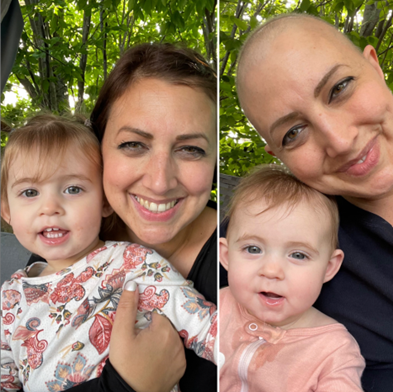
Jen’s journey with PMBCL began during one of the most joyful times of her life – welcoming her long-awaited daughter.
During her third trimester, she experienced significant pain that was initially attributed to pregnancy. After developing COVID-19 and undergoing a complicated C-section, Jen continued to have persistent fevers. Further investigation, including a chest X-ray, revealed a large mediastinal mass. She was soon diagnosed with PMBCL, with a tumour that was affecting her breathing.
Jen began urgent chemotherapy and faced several complications along the way, including infections, medication reactions, blood clots, and hair loss. Despite the challenges, she completed six months of treatment successfully. Her tumor shrank, and she is now years into remission.
Jen believes her daughter saved her life, as the delivery led to the investigations that uncovered her cancer. Today, she shares her story to offer hope and raise awareness of rare lymphomas like PMBCL. She encourages others to speak up for themselves, stay persistent when something does not feel right, and never give up on asking for help.
As Jen says, “follow your progress and learn about your diagnosis. Though it could be scary, the more you know, the better you can advocate.” Her journey reminds others that even in difficult times, knowledge, persistence, and self-advocacy can make a real difference.
Monomorphic Epitheliotropic Intestinal T-Cell Lymphoma (MEITL): Zhou Zhou shares his father’s story
Monomorphic Epitheliotropic Intestinal T-Cell Lymphoma (MEITL) is an extremely rare and aggressive subtype of peripheral T-cell lymphoma. It develops from abnormal T lymphocytes in the lining of the small intestine and is known for its rapid progression and serious complications, including bowel perforation, obstruction, and bleeding. MEITL is classified under intestinal T-cell lymphomas and behaves much more aggressively than many common B-cell lymphomas.
In Canada, T-cell lymphomas account for only about 10–15% of all non-Hodgkin lymphomas, and MEITL represents only a very small fraction of those cases. That means only a handful of Canadians are diagnosed with this specific subtype each year. Because of its rarity, there is limited research compared to more common lymphomas, and outcomes remain challenging. Many patients require intensive chemotherapy, and even then, relapse rates are high. The need for improved therapies and access to emerging treatments in Canada remains critical.

In January 2025, Zhou Zhou’s father was rushed to the emergency room with severe abdominal pain and significant weight loss. Imaging revealed a perforation in his small bowel, and he underwent emergency surgery that same night. Shortly after, the family learned that the perforation was caused by lymphoma. Further testing confirmed a diagnosis of MEITL – a disease they had never heard of before.
He began chemotherapy while still recovering from major surgery. The following months were marked by long hospital stays, infectious complications, and intensive treatment. Despite receiving chemotherapy as planned, his condition became increasingly complex.
By early May, doctors confirmed that the lymphoma had progressed. The treatment had not been effective, and he was too weak to continue further therapy. With limited options remaining, the family made the difficult decision to focus on comfort and quality of life. He passed away on May 19, 2025, at the age of 56.
Zhou Zhou now shares his father’s story to raise awareness about rare T-cell lymphomas like MEITL. He hopes that through continued research, improved access to emerging therapies, and greater awareness in Canada, future patients will have more treatment options and better outcomes.
For more information on Peripheral T-Cell Lymphomas, you can watch Lymphoma Canada’s conference session featuring Dr. Kerry Savage: https://www.youtube.com/watch?v=LyFVpiePJQE
Subcutaneous Panniculitis-Like T-Cell Lymphoma (SPTCL): Harjeet’s Story
Subcutaneous Panniculitis-Like T-Cell Lymphoma (SPTCL) is an extremely rare subtype of T-cell lymphoma that primarily affects the fatty tissue beneath the skin. It is classified as a peripheral T-cell lymphoma and represents only a very small fraction of non-Hodgkin lymphoma cases in Canada. Because of its rarity, diagnosis can be complex and patients may face delays before receiving clear answers.
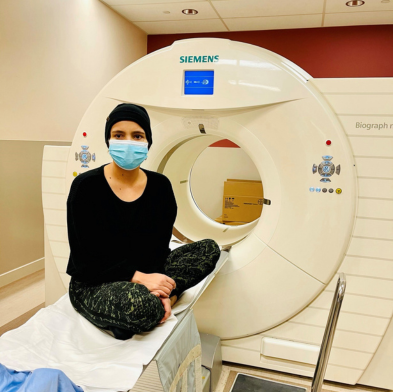
In May 2019, Harjeet began experiencing persistent high fevers with no clear cause. Months of emergency room visits, imaging scans, biopsies, and extensive testing brought no definitive diagnosis – only temporary symptom management.
A final biopsy eventually confirmed stage 4 SPTCL.
Harjeet began chemotherapy in August 2019 and completed 12 rounds, achieving partial remission. In April 2020, during the height of the COVID-19 pandemic, she underwent a stem cell transplant, with her brother serving as her donor. The transplant required 32 days of isolation without visitors. It was a physically and emotionally demanding experience – but ultimately successful.
Today, Harjeet is a survivor. Seven years post-diagnosis and six years post-transplant, she has no evidence of disease and continues regular follow-up care.
“As my blood cancer was so rare and at stage 4, I couldn’t find anyone with a similar type of cancer, making it increasingly difficult. I joined Lymphoma Canada’s community to find support and connections.”
Advocacy is deeply important to Harjeet, and this past year she was featured in Lymphoma Canada’s conference panel discussion, where she shared her experience and the importance of patient voice in shared decision making.
Watch the discussion “Shared Decision Making – Aligning Treatment with What Matters Most” here: https://www.youtube.com/watch?v=FOGMqvg7mf0
Waldenström’s Macroglobulinemia (WM): Steven’s Story
Waldenstrom macroglobulinemia (WM) is a rare, slow-growing type of non-Hodgkin lymphoma, a cancer of the blood and immune system. In WM, the body produces too much of an abnormal protein called IgM (immunoglobulin M), an antibody that normally helps fight infection. When IgM levels become too high, the blood can become thicker than normal, which may lead to symptoms such as fatigue, weakness, headaches, vision changes, or bleeding problems.
WM is uncommon in Canada and around the world. Because it can behave differently from person to person, patients typically need regular monitoring and personalized treatment plans based on their symptoms and overall health.

Steven was diagnosed with WM in 2014 after noticing purple spots on his legs and discovering his IgM levels were abnormally high. He describes his approach to managing the disease as, “Take it one day at a time.” His journey was particularly challenging because the year before, in 2013, he had been hospitalized and diagnosed with type 2 diabetes, adding complexity to his care.
Over the years, Steven has undergone several treatments, including rituximab with cyclophosphamide, ibrutinib (Imbruvica), IVIG therapy, and most recently zanubrutinib (Brukinsa). He has navigated care across multiple cities, working with a range of specialists to manage his condition.
Steven shares his story to encourage others living with rare lymphomas, highlighting the importance of persistence, self-advocacy, and staying connected with knowledgeable healthcare teams.
For more information on the management of Waldenstrom Macroglobulinemia, view Lymphoma Canada’s conference session featuring Dr. Neil Berinstein: https://www.youtube.com/watch?v=ciBR4AqbKio
Mantle Cell Lymphoma (MCL): Susan’s Story
Mantle cell lymphoma (MCL) is a rare type of blood cancer that develops in the lymphatic system, part of the body’s immune defense. It arises from abnormal B lymphocytes (a type of white blood cell) in the “mantle zone” of the lymph nodes. MCL is a mature B-cell non-Hodgkin lymphoma (NHL) that accounts for 3–10% of new NHL cases in Canada. It is most often diagnosed in adults over the age of 60 and occurs more frequently in men. Because of its rarity, many Canadians have never heard of MCL before diagnosis.
Susan was diagnosed with Mantle Cell Lymphoma in September 2020. She had no significant symptoms at the time, other than an enlarged spleen – nearly twice its normal size – and abnormal bloodwork showing a low platelet count and elevated white blood cell count. She began treatment in October 2020 with bendamustine and rituximab for six months. She tolerated the treatment relatively well, and in March 2021, after completing therapy, she was told she was in remission – which she continues to maintain today.
Following her initial treatment, Susan received maintenance rituximab injections every three months for an additional year, completing that phase in January 2023. Although she worries about the possibility of relapse, she makes a conscious effort to live fully and appreciate each day.
Susan encourages others facing a diagnosis to have faith in their specialists – “they truly have your back”. She is also a regular participant in Lymphoma Canada’s educational webinars, staying informed and connected with the lymphoma community.
For more information on the management of Mantle Cell Lymphoma, please visit the following conference session featuring Dr. Mary Margaret Keating: https://www.youtube.com/watch?v=ZnjJq4jFod8
Additional Resources:
For information on past and upcoming webinars, please visit: https://www.lymphoma.ca/news-events/educational-forums-webinars/
Join our monthly virtual support group: Lymphoma Canada Wellspring Support Group – Lymphoma Canada
To access our one-on-one peer mentoring program, visit: https://www.lymphoma.ca/resources/support/peer-support-program/
To help advance research and improve the future for Canadians affected by lymphoma, please consider supporting Lymphoma Canada through a donation.